
The series
Every day, a beechwood ball wakes up in its nest on top of a music box, travels through the mechanisms of a workshop of toys made of wood, felt, brass and string, and at sunset rolls back home to sleep.
Kitomo is a series told in pictures and sound for the very young. The only word you hear is its title, “Kitomo”, and the only word you read is its logo, at the start and end of every episode. That is why it is understood in the same way in any language.
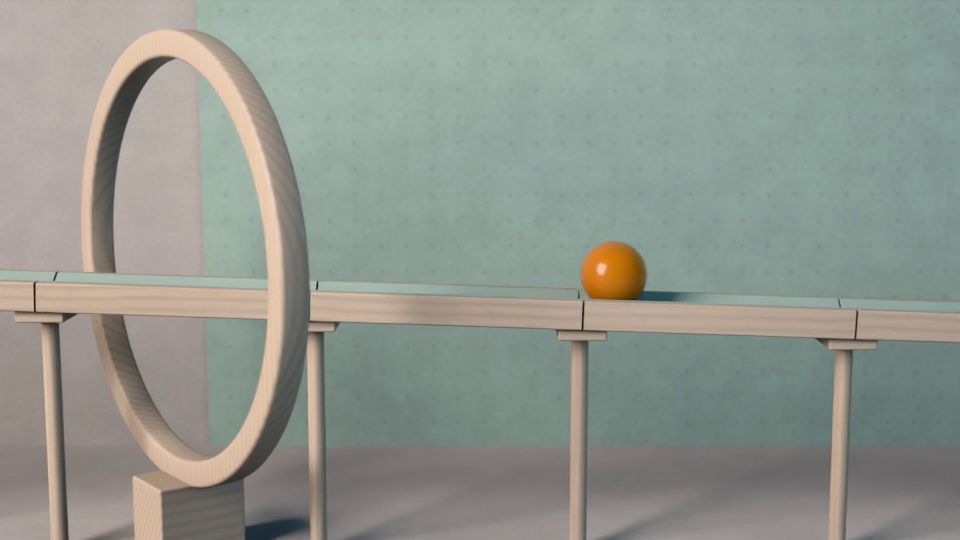
The workshop
The whole series takes place on a toymaker's bench, at real scale: a beechwood board covered in pearl‑grey felt. On it, every mechanism is made of four materials:
- pale beech and maple, with the grain showing;
- satin brass;
- natural cotton string;
- wool felt, finished with blanket stitch.
You can see the pulleys, the seams and the strings. Each mechanism shows what moves it.
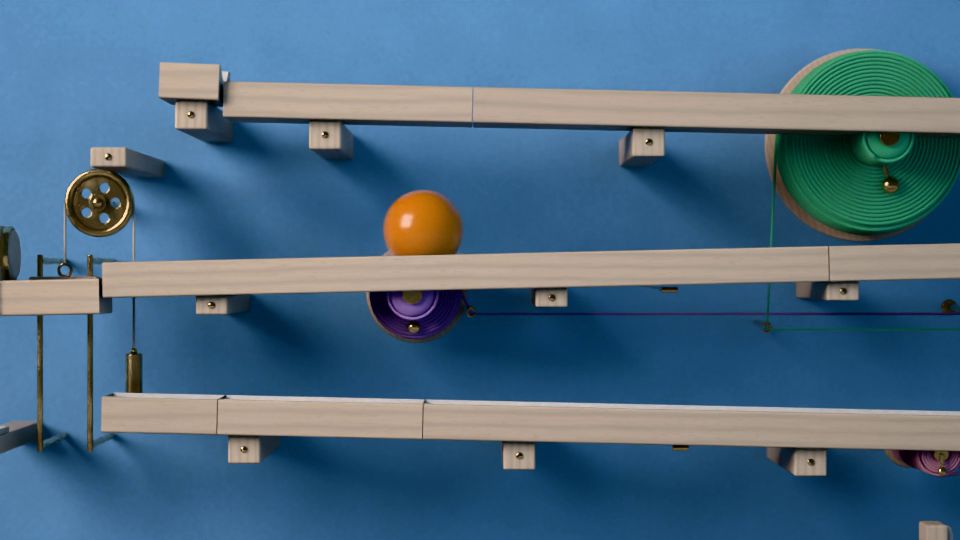
The workshop draws on Montessori education: real materials, causes in plain sight, repetition and an unhurried pace.
Each corner of the workshop has a felt wall in its own colour, and each colour has its own musical key. Between corners, the ball rolls through a short felt tunnel.
The ball
It is a turned, lacquered beechwood ball in toasted saffron: 50 millimetres across and 46 grams. It is the only strong warm colour in the workshop, so the eye always finds it.
It sleeps, wakes up, leaves home, hesitates at an edge, carries on and comes back. The viewer gives it intention; the series gives it weight. At the creator's home they call it “the little ball”.
Home
The ball lives in a felt nest on top of a beechwood music box. Beside it, a maple pinwheel sets the box going when someone blows.
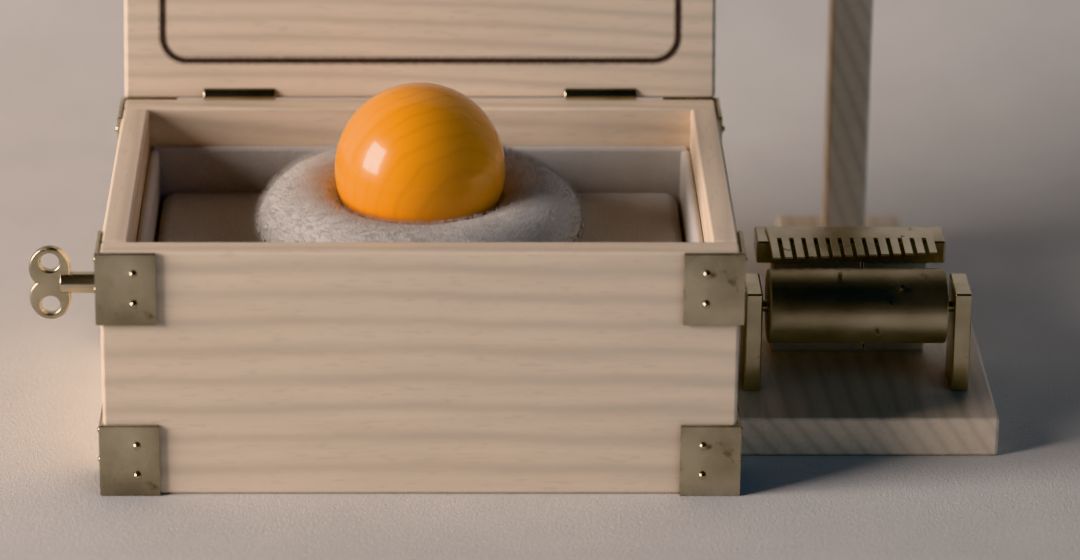
When the ball comes back in the evening, its weight winds the box: three clicks, each one softer. The theme plays slower and slower, because the box really is winding down.
A day in every episode
The structure is the same in all 26 episodes. The three moments are new every day. Each episode combines what repeats with what is new.
| Moment | What happens |
|---|---|
| Morning in the workshop | Light rises. Distant birds. The ball sleeps |
| The title | A voice says “Kitomo”. Two wooden taps and a little bell |
| The breath | Someone blows, the pinwheel turns, the music box plays and the ball sets off |
| The workbench | The ball goes down the abacus steps and moves one bead on each step: three left, two, one |
| The ramp and the strings | A beechwood ramp and two taut strings carry the ball from one corner to the next |
| Three corners | Three new mechanisms, each in its own colour |
| The merry‑go‑round | The ball looks back on the three moments of its day |
| Home | The sun sets. The ball climbs up to its nest and winds the box for tomorrow |
| Good night | The box plays the theme, slower and slower. Crickets. Three seconds of silence |
Learning by watching
Observe, anticipate, check. Everything that happens has a visible cause: the key, the string or the weight that moves each thing.
The series gives a hint just before something happens. A key makes the bud tremble before the flower opens, so there is time to anticipate and then check the guess.
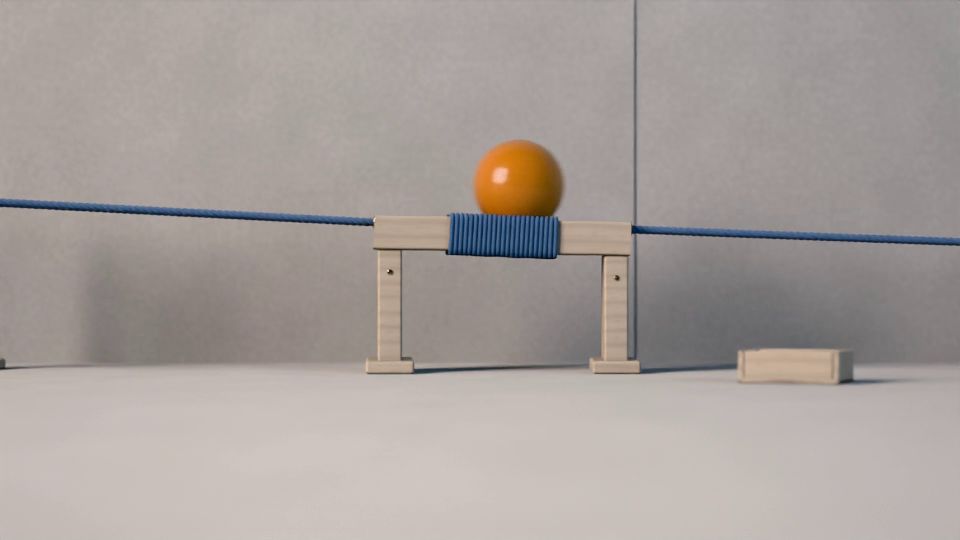
Big things move slowly and sound low; small things move quickly and sound high. And what happens on screen works the same way on a real table.
Every episode explores ideas for three‑year‑olds: counting to three, big and small, high and low, shapes, in and out, colours.
One episode for everyone
Kitomo is understood through the eyes and the ears. Brothers and sisters of different ages, parents and grandparents can watch it together.
It is designed for neurodivergent and neurotypical children to enjoy together: the structure is always the same, there is one focus on screen, the pace is unhurried and the sounds are soft.
The workshop's colours are also measured for children with colour blindness: the ball stands out from every wall by colour and by brightness, in typical vision and in the two most common kinds of red‑green colour blindness.
The humour of objects
Kitomo's humour is all about timing. A ball that hesitates at the edge of a step. A lid that bows just after the ball has gone by. The series lets you see each gag coming a moment before.
Fact sheet
- Format
- 3D animated series · 26 episodes of 6 min 11 s
- Age
- Designed for age 3, suitable from 2
- Language
- One spoken word, the title. The series is the same in every language
- Created and directed by
- Mario Hernández
- Production
- Mario Hernández Pérez‑Calvo · Spain
- Status
- In production. Official channel premiere: Friday 15 January 2027